Premature beat burden on Apple Watch ECG: what it means
Premature beat burden is the percentage of all heartbeats in a recording that are premature, either PVCs (from the lower chambers) or PACs (from the upper chambers). ECG+ calculates this separately for PVCs and PACs from each Apple Watch ECG recording and tracks it over time.
For example, if a 30-second recording contains 40 beats and 4 of them are PVCs, the PVC burden for that recording is 10%.
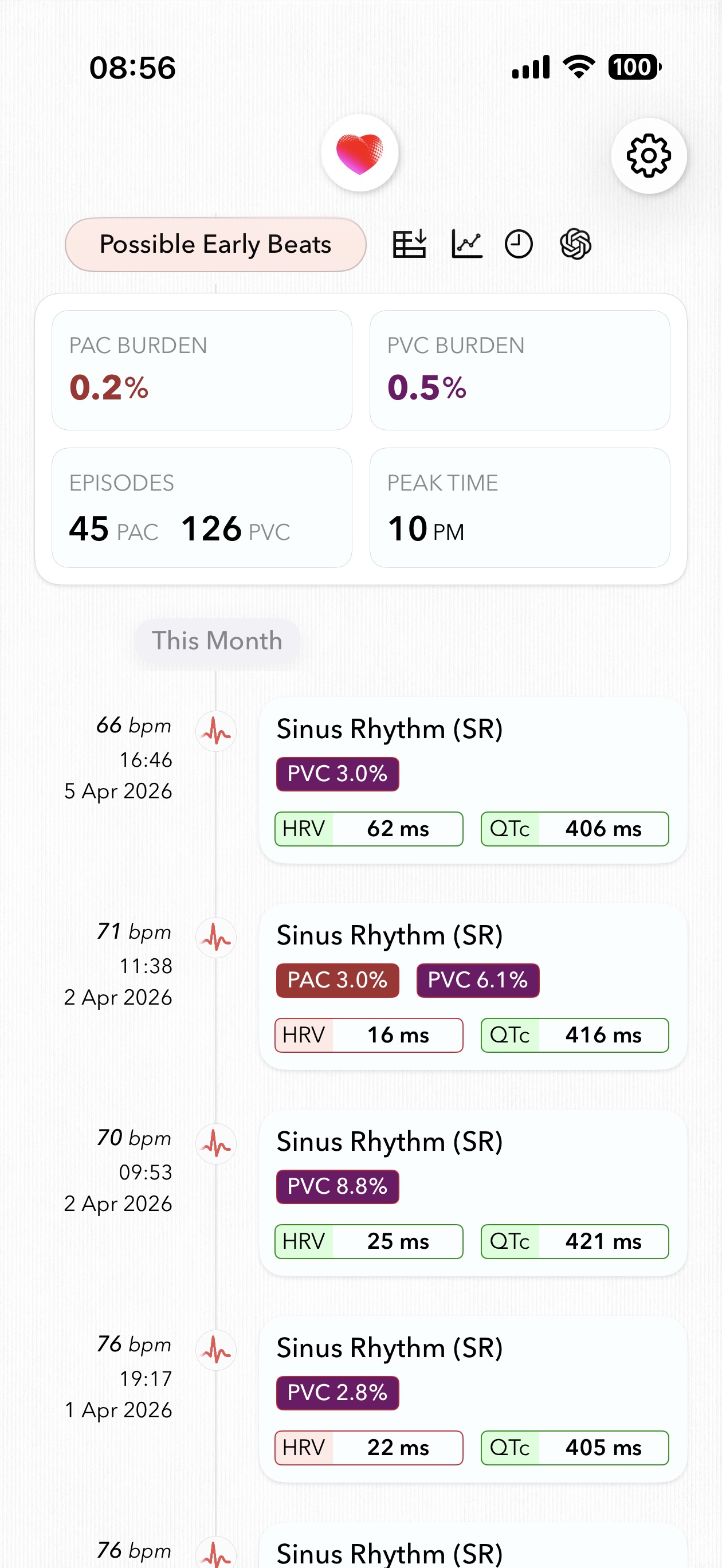
Why burden matters more than count
Counting isolated premature beats tells you they are present. Burden tells you how significant they are relative to your overall heart rhythm. A handful of PVCs in a fast recording may mean something different from the same number in a slow one, burden accounts for that.
It is also more useful for tracking change over time. If your PVC burden was 8% last month and is 2% today, that is a meaningful improvement that a simple beat count would not clearly show.
What the numbers mean
There is no universal threshold that makes a burden "normal" or "abnormal", context matters. That said, some general reference points are widely used clinically:
- Under 1%: very low, seen commonly in healthy hearts
- 1–10%: mild to moderate; worth monitoring, often benign
- Above 10%: higher burden; more likely to be discussed with a doctor, particularly for PVCs, where sustained high burden can occasionally affect heart function over time
A single Apple Watch ECG recording is only 30 seconds, so the burden shown reflects that snapshot, not your burden across the whole day. Patterns across multiple recordings are more informative than any single result.
PVC burden vs PAC burden
ECG+ tracks PVC and PAC burden separately because they carry different clinical weight. High PVC burden has been more extensively studied and is the one doctors are more likely to act on. PAC burden is still useful to track, particularly if PACs are frequent or if you have a history of atrial fibrillation, but a high PAC burden is less likely on its own to prompt intervention.
What to do next
- Take recordings at different times of day to build a picture of your typical burden, not just a one-off snapshot.
- Look at the trend over time in ECG+, is the burden stable, rising, or falling?
- Share with your doctor using ECG+'s PDF export if your burden is consistently above 10%, or if it is lower but accompanied by symptoms.
Frequently asked questions
What is a normal PVC burden?
There is no single universal cut-off, but a burden under 1% is considered very low and is common in healthy hearts. Many people sit somewhere in the low single digits without any problem.
What PVC burden is considered high?
A burden above 10% is more likely to be discussed with a doctor, and a sustained very high burden can occasionally affect heart function over time. Context matters, so the trend across many recordings is more useful than any single result.
How does ECG+ calculate beat burden?
ECG+ calculates burden as the percentage of all beats in a recording that are premature, and it tracks PVC and PAC burden separately so you can follow each over time.