Sinus rhythm on Apple Watch ECG: what it means
If your Apple Watch ECG came back as Sinus Rhythm: or ECG+ shows "SR" on your report: that's the result you want to see. Sinus rhythm is the medical term for a normal, regular heartbeat. Here's what it means, how it looks on your Apple Watch ECG, and what ECG+ can still tell you about a recording that's in sinus rhythm.
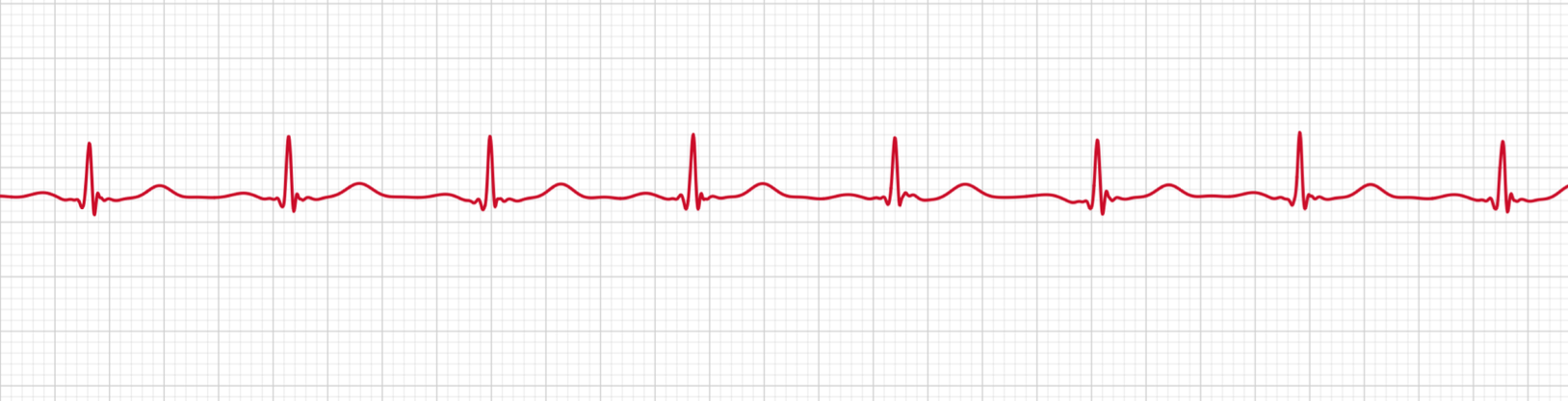
Normal sinus rhythm: regular, evenly spaced beats with a steady, repeating shape.
What is sinus rhythm?
Sinus rhythm is the heart's normal rhythm, set by the sinoatrial (SA) node: a small patch of specialized tissue in the right atrium that acts as your heart's natural pacemaker. It sends out steady electrical impulses that make the heart contract in a regular, coordinated way, pumping blood efficiently around your body. When those impulses fire normally and travel the heart's usual electrical path, the result is sinus rhythm.
How sinus rhythm looks on Apple Watch ECG
On a single-lead Apple Watch ECG, a normal sinus rhythm shows a few consistent features:
- Regular, evenly spaced beats: the gaps between beats (the R–R intervals) stay consistent.
- A clear, upright P wave before each beat: the sign that the SA node started it.
- A resting heart rate usually between 60 and 100 bpm, varying with activity, stress and rest.
- A steady, repeating shape from one beat to the next.
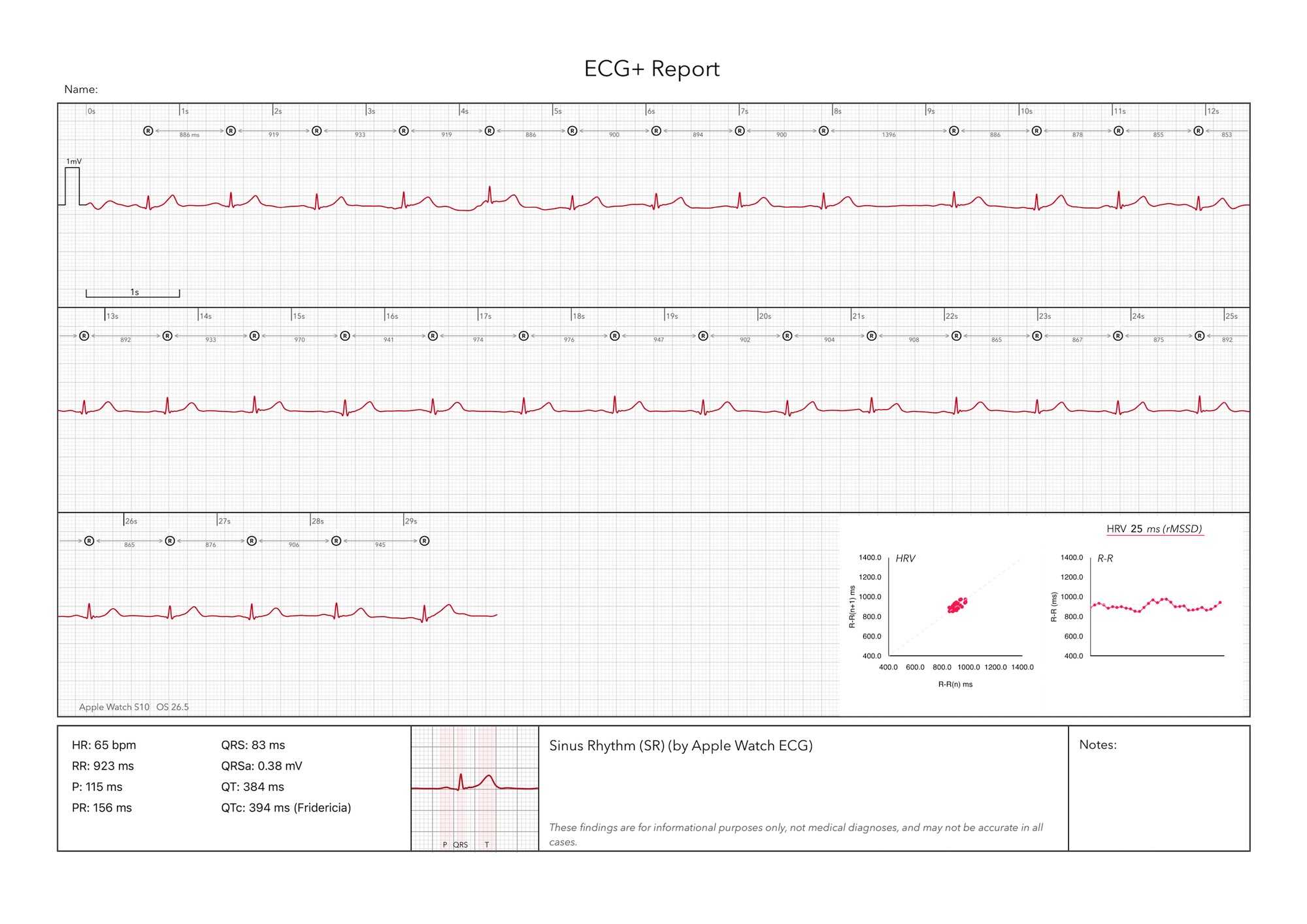
ECG+ labels the overall rhythm as Sinus Rhythm (SR) and lays out the underlying measurements, heart rate, PR, QT/QTc and more, from the same recording.
Why sinus rhythm is good news
A sinus rhythm result means your heart was beating normally during that recording, the chambers contracting in the right order, at a steady pace. That's exactly what you want, and for most people it's reassuring confirmation that nothing unusual was happening in that moment.
What ECG+ adds to a sinus rhythm result
The Apple Watch ECG app reports the headline, whether the rhythm is sinus rhythm or not. ECG+ reads the detail underneath it. A recording can be in sinus rhythm overall and still contain occasional early beats or other features the standard result doesn't mention. From the same recording, ECG+ can surface:
- Premature beats, PACs and PVCs: that occur within an otherwise normal rhythm.
- QT/QTc timing and other interval measurements.
- Heart rate variability and how your readings trend over time.
So a sinus rhythm label is a great starting point, and ECG+ helps you see the full picture within it.
When sinus rhythm doesn't tell the whole story
A single recording reflects only the 30 seconds you captured. Some rhythm issues, such as paroxysmal AFib, come and go, so a normal result now doesn't rule them out. If you have symptoms such as palpitations, dizziness or chest discomfort, it's worth taking recordings at different times and sharing them with your doctor, even when each one reads as sinus rhythm.
Frequently asked questions
Is sinus rhythm on Apple Watch good?
Yes. Sinus rhythm is the normal, expected heartbeat. It means the recording showed a regular rhythm led by the heart's natural pacemaker (the SA node), which is the result most people hope to see.
Does sinus rhythm mean my heart is healthy?
It's a reassuring sign for that recording, but it isn't a full health check. A 30-second ECG in sinus rhythm doesn't capture intermittent problems or assess everything about your heart, so persistent symptoms are still worth discussing with a doctor.
Can Apple Watch show sinus rhythm but still miss something?
Yes. The app classifies the overall rhythm, but a recording in sinus rhythm can still contain occasional premature beats or other details it doesn't label. ECG+ analyzes the same recording to surface those, and intermittent issues may simply not be present during a given 30-second reading.