Triplets on Apple Watch ECG: what they mean and what to do
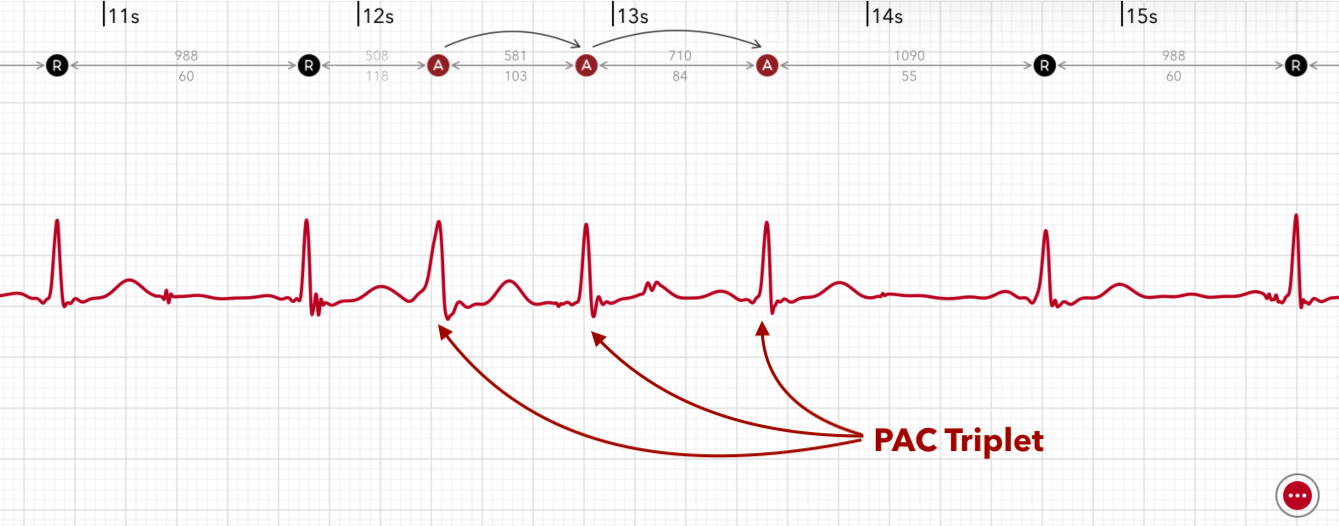
A triplet is three premature beats occurring back to back, without a normal beat in between. It is one step beyond a couplet (two in a row), and unlike bigeminy or trigeminy, where premature beats repeat in a steady alternating pattern, a triplet is a short run of three early beats that then returns to normal rhythm.
The premature beats can be PVCs (from the lower chambers), PACs (from the upper chambers), or occasionally a mix of both. ECG+ marks the triplet and suggests whether it looks like PVC or PAC.
PVC triplets on Apple Watch ECG
In a PVC triplet, three premature ventricular contractions fire in succession. The beats are wide and arrive early, producing a clear run of three abnormal beats within the otherwise normal rhythm. Three consecutive ventricular beats is the point at which clinicians consider the rhythm a short run, so PVC triplets are worth a closer look than single PVCs or couplets.
PAC triplets on Apple Watch ECG
In a PAC triplet, three premature atrial contractions occur in a row. The beats are narrower than PVC triplets and can look more similar to normal beats, but they arrive ahead of schedule. ECG+ marks the run from its early timing. Short runs of PACs are common and usually less concerning than ventricular runs.
What triplets feel like
Many people feel nothing when a triplet occurs. When they are noticeable, the sensation tends to be more pronounced than a couplet:
- A brief run or flutter of several rapid beats in quick succession
- A stronger "fluttering" or "racing" sensation that resolves quickly
- A noticeable thump followed by a short pause
- Often nothing, especially with PAC triplets
Are triplets more concerning than couplets?
Triplets are a step up from couplets because they are three consecutive premature beats rather than two. For most people they are still brief and benign, and the same everyday triggers apply, caffeine, poor sleep, stress, alcohol, and dehydration, and reducing them often lowers how often triplets appear.
The reason triplets attract more attention is that three beats in a row marks the threshold of a short run of abnormal rhythm. With PVCs in particular, a run of three or more fast ventricular beats is what clinicians describe as non-sustained ventricular tachycardia, usually short and harmless on its own, but worth having looked at. If you capture a triplet, especially a PVC triplet, or if triplets are frequent or come with symptoms such as dizziness, fainting, or chest discomfort, it is worth showing your doctor.
What to do next
- Take recordings at different times to see how often triplets are appearing and whether they are occasional or recurring.
- Note any triggers: caffeine, alcohol, sleep quality, stress, and whether triplets appear alongside them.
- Share with your doctor using ECG+'s PDF export, particularly for PVC triplets, frequent runs, or any triplet that causes symptoms.
Frequently asked questions
Can Apple Watch detect triplets?
The Apple Watch ECG app only classifies the overall rhythm, such as sinus rhythm or AFib, and does not label triplets. ECG+ analyzes the raw recording to mark three premature beats in a row as a possible PVC or PAC triplet.
Are triplets dangerous?
Most triplets are brief and benign, and they share the same common triggers as single premature beats. Because a triplet is three abnormal beats in a row, it sits at the threshold of a short run and is worth more attention than a couplet, especially PVC triplets, which are worth showing to a doctor.
What is the difference between a couplet and a triplet?
A couplet is two premature beats in a row and a triplet is three in a row. Three consecutive ventricular beats is the point at which a run begins, so triplets generally warrant closer attention than couplets.